Infrastructure & Data Delivery for Institutional Data Delivery
Alex Thorne Lead Software Engineer, Road Mobility Analysis
Published: October 24, 2024
1.0 Infrastructure Architecture
The Road Mobility data engine is architected for the zero-trust, high-frequency requirements of institutional energy traders. The system manages the ingestion of billions of granular data points originating from diverse vehicle telematics, embedded sensors, and global GPS feeds.
To ensure data integrity during peak volatility, we employ a Kafka-native stream processing architecture. This allows for sub-second ingestion and ensures no data loss, facilitating a 24-hour delivery commitment where refined signals are normalized and pushed to institutional terminals within a strict cycle.
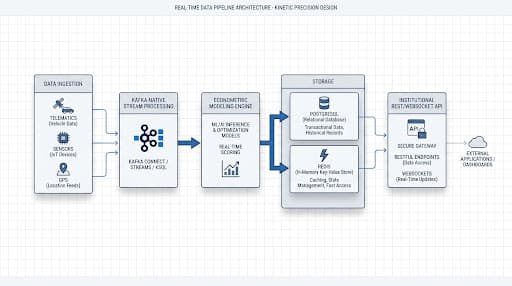
Core Technical Stack
2.0 Secure Data Distribution
Institutional access is provided through a sovereign Data Distribution Layer. As illustrated in the security schema (Figure 2), every endpoint is protected by mutual TLS (mTLS) and granular OAuth2 scopes, tailored to meet hedge fund and investment bank security protocols.
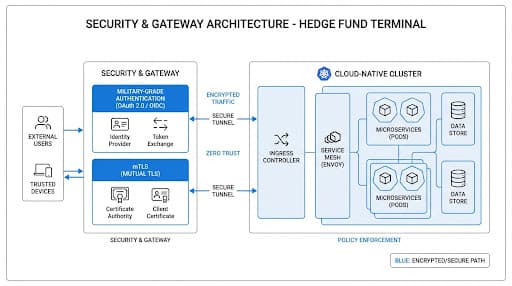
The RESTful and WebSocket interfaces allow for programmatic alpha generation. Data provenance is ensured through SHA-256 hashing at the ingestion point, providing a transparent audit trail for compliance.
// Normalized Fuel-Flow Metric
{
  "region": "EU-North",
  "timestamp": "2024-10-24T14:30:00Z",
  "indices": [
    {
      "metric": "total_transit_volume",
      "value": 14205.82,
      "delta_24h": +2.4
    }
  ],
  "provenance_id": "SHA-256:7f83b2..."
}
3.0 Cloud-Native Reliability
The infrastructure leverages high-availability clusters across multiple availability zones. We implement immutable data provenance tracking, allowing every signal to be traced back to its raw ingestion packet for regulatory auditing. This is critical for SOC2 Type II and GDPR data sovereignty compliance.

Dedicated VPC clusters for enterprise partners requiring physical and logical separation.
Full adherence to SOC2 Type II and regional GDPR data sovereignty requirements.
Conclusion
Road Mobility Analysis’s infrastructure represents the pinnacle of institutional data engineering. By combining low-latency stream processing with a security-first gateway, we provide the programmatic edge required for modern algorithmic trading and market analysis.
Request Technical Documentation
Access complete technical specifications, security whitepapers, and integration guides for the Road Mobility data engine.